






New Cold Wars: China’s Rise, Russia’s Invasion, and America’s Struggle to Defend the West
The World Affairs Council of Charlotte will host David Sanger, White House and National Security Correspondent at the New York Times and author, as part of the WACC Speaker Series on May 27th, 2026.
Few journalists have covered the shifting tides of American power more closely than Sanger. Geopolitics is playing a significant role in the new world order as the United States, Russia, and China fight for global supremacy through military strength, political maneuvering, technological advancements, and economic success. The war between Ukraine and Russia grinds on despite the international community’s efforts to end the conflict. China and the U.S. are in a race to achieve AI greatness. America’s global influence is waning, and its presence in the Middle East is destabilizing the region and creating major challenges for Americans right here at home.
Join us for lunch as Sanger brings his signature insight to one of the most pressing questions of our time: Can America still defend Western ideals in an era of historic geopolitical change?
ONE OF NPR’S BEST BOOKS OF THE YEAR: New Cold Wars: China’s Rise, Russia’s Invasion, and America’s Struggle to Defend the West
For years, the United States was confident that the newly democratic Russia and increasingly wealthy China could be lured into a Western-led order that promised prosperity and relative peace—so long as they agreed to Washington’s terms. By the time America emerged from the age of terrorism, it was clear that this had been a fantasy.
Now the three powers are engaged in a high-stakes struggle for military, economic, political, and technological supremacy, with nations around the world pressured to take sides. Yet all three are discovering that they are maneuvering for influence in a far more turbulent world than they imagined.
Based on a remarkable array of interviews with top officials from five presidential administrations, U.S. intelligence agencies, foreign governments, and tech companies, Sanger unfolds a riveting narrative spun around the era’s critical questions: Will the mistakes Putin made in his invasion of Ukraine prove his undoing and will he reach for his nuclear arsenal—or will the West’s famously short attention span signal Kyiv’s doom? Will Xi invade Taiwan? Will both men deepen their partnership to undercut America’s dominance? And can a politically dysfunctional America still lead the world?
Taking readers from the battlefields of Ukraine—where Russia uses bullets from North Korea and drones from Iran—to the Taiwan headquarters where the world’s most advanced computer chips are produced and on to tense debates in the White House Situation Room, New Cold Wars is a remarkable first-draft history chronicling America’s return to superpower conflict, the choices that lie ahead, and what is at stake for the United States and the world. (Source Penguin Books)

- WACC Private Reception Sponsorship and Underwriting (May 27th, 2026) – Download Link
- WACC Speaker Series Sponsorship and Underwriting (May 27th, 2026) – Download Link
Program Information:
Date: Wednesday, May 27th, 2026
Check-In and Pre-Lunch Networking: 11:30 a.m. – 12:00 p.m.
Lunch & Presentation: 12:00 p.m. – 1:30 p.m.
Location: Hilton Charlotte Uptown
Cost: $65 (WACC Member Rate) | $80 (Non-Member Rate) | $45 (Young Professionals of the World Affairs Council of Charlotte — YPWACC) | $40 (WACC Student Member / WACC Educator Member)


Biography:
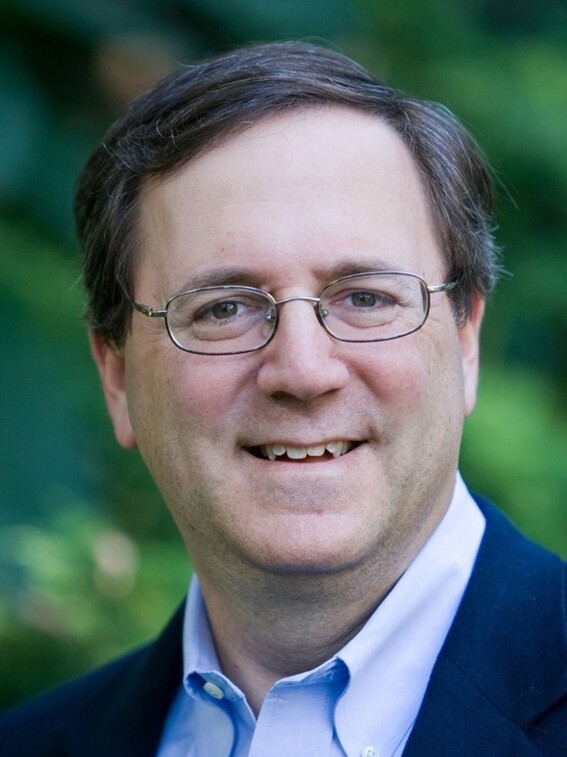
David E. Sanger is a White House and national security correspondent for The New York Times, and one of the news organization’s senior writers. In a 42-year reporting career at The Times, he has played central roles on three teams that have won Pulitzer Prizes, most recently in 2017 for international reporting. In April, he is publishing “New Cold Wars: China’s Rise, Russia’s Invasion and the Struggle to Defend the West.”
Prior to the publication of “New Cold Wars,’’ his fourth book, he was the author of “The Perfect Weapon: War, Sabotage and Fear in the Cyber Age’’ (2018) and an HBO documentary by the same title (2020), which examines the emergence of cyberconflict and its role in changing the nature of global power.
He is also the author of two Times best sellers on foreign policy and national security: “The Inheritance: The World Obama Confronts and the Challenges to American Power,” published in 2009, and “Confront and Conceal: Obama’s Secret Wars and Surprising Use of American Power,” published in 2012.
For The Times, Mr. Sanger has served as Tokyo bureau chief, Washington economic correspondent, White House correspondent during the Clinton and Bush administrations, and chief Washington correspondent.
Mr. Sanger spent six years in Tokyo, writing about the emergence of Japan as a major American competitor, and then the country’s humbling recession. He wrote many of the first articles about North Korea’s emerging nuclear weapons program.
Returning to Washington, Mr. Sanger turned to a wide range of diplomatic and national security issues, from nuclear proliferation to the rise of cyberconflict among nations. In reporting for The Times and “Confront and Conceal,” he revealed the story of Olympic Games, the code name for the most sophisticated cyberattack in history, the American-Israeli effort to sabotage Iran’s nuclear program with the Stuxnet worm. His journalistic pursuit of the origins of Stuxnet became the subject of the documentary “Zero Days,” which made the short list of Academy Award documentaries in 2016.
Mr. Sanger was a leading member of the team that investigated the causes of the Challenger disaster in 1986, which was awarded a Pulitzer in national reporting the following year. A second Pulitzer, in 1999, was awarded to a team that investigated the struggles within the Clinton administration over controlling technology exports to China. He has also won the Weintal Prize for diplomatic reporting for his coverage of the Iraq and Korea crises, the Aldo Beckman prize for coverage of the presidency, and, in two separate years, the Merriman Smith Memorial Award, for coverage of national security issues. “Nuclear Jihad,” the documentary that Mr. Sanger reported for Discovery/Times Television, won the duPont-Columbia Award for its explanation of the workings of the A. Q. Khan nuclear proliferation network. That coverage was also a finalist for a Pulitzer.
A 1982 graduate of Harvard College, Mr. Sanger was the first senior fellow in The Press and National Security at the Belfer Center for Science and International Affairs at Harvard. With Graham T. Allison Jr., he co-teaches “Central Challenges in American National Security, Strategy and the Press” at the Kennedy School of Government. He is also a national security contributor to CNN.