







To Dare Mighty Things: U.S. Defense Strategy Since the Revolution
What does 250 years of American conflict tell us about who we are as a nation?
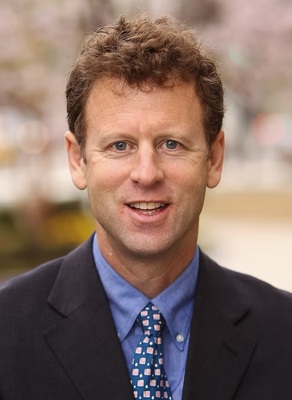
Join the World Affairs Council of Charlotte for a luncheon on Tuesday, September 22nd, 2026 with Michael O’Hanlon, Senior Fellow and Director of Research for the Foreign Policy Program at the Brookings Institution, inaugural holder of the Philip H. Knight Chair in Defense and Strategy, and author of To Dare Mighty Things: U.S. Defense Strategy Since the Revolution.
Much of the history of U.S. defense over the course of 250 years has been a story of success. Insulated by two oceans and mostly friendly neighbors, but constantly ambitious abroad, America has dared mighty things and often achieved them, argues defense analyst Michael O’Hanlon. After growing into a continental power, largely through force of arms, during the first half of its history, it then led the way to coalition victories in two world wars, pursued peace in the Cold War, and has contributed to the most democratic period in human history. But it is a more “dangerous nation” than most citizens appreciate, given that its leaders, as well as its people, are highly self-confident and activist. O’Hanlon claims that only by understanding this “national DNA” can we hope to steer safely through the twenty-first century. He further argues that, in contrast to its consistently assertive grand strategy, there has been no single defining American “way of war” since 1775—a good thing, since what often worked for the country in the past may be of less relevance for the modern age. (Source: Yale University Press)
O’Hanlon will share his analysis of 250 years of American conflict from the Revolution through two decades of post-9/11 war to examine how the U.S. has waged war, sustained peace, and evolved as a military power in today’s world order. He’ll cover the defining questions of this moment: What does American strength look like in an era of great-power rivalry? How do shifting alliances, emerging technologies like AI, and conflicts in Ukraine, Iran, and the Indo-Pacific reshape U.S. defense strategy? And what does national security mean for a nation marking 250 years and looking toward the next?

- Private Reception Sponsorship and Underwriting – DOWNLOAD LINK
- WACC Speaker Series Sponsorship and Underwriting – DOWNLOAD LINK
Program Information:
Date: Tuesday, September 22nd, 2026
Check-In and Pre-Lunch Networking: 11:30 a.m. – 12:00 p.m.
Lunch & Presentation: 12:00 p.m. – 1:30 p.m.
Location: Hilton Charlotte Uptown
Cost: $60 (WACC Member Rate) | $75 (Non-Member Rate) | $40 (Young Professionals of the World Affairs Council of Charlotte — YPWACC) | $35 (WACC Student Member / WACC Educator Member)


Biography:
Michael O’Hanlon is the inaugural holder of the Philip H. Knight Chair in Defense and Strategy and director of research in the Foreign Policy program at the Brookings Institution, where he specializes in U.S. defense strategy and budgets, the use of military force, and American national security policy. He is a senior fellow and directs the Strobe Talbott Center on Security, Strategy, and Technology. He co-directs the Africa Security Initiative as well. He is an adjunct professor at Georgetown University and Columbia University and was a member of the Pentagon’s Defense Policy Board from 2021 to 2025; he was also a member of the external advisory board at the Central Intelligence Agency from 2011-12. His newest book, timed to coincide with the nation’s 250th birthday, is “To Dare Mighty Things: U.S. Defense Strategy Since the Revolution” (Yale Press, 2026).In 2023, O’Hanlon published a book titled “Military History for the Modern Strategist: America’s Major Wars since 1861.” The paperback version of the book, with a preface covering the American Revolution as well as the declared wars of the 19th century, came out in 2024.
O’Hanlon’s other books include “The Art of War in an Age of Peace: U.S. Grand Strategy and Resolute Restraint” (Yale, 2021); “Defense 101: Understanding the Military of Today and Tomorrow” (Cornell, 2021); “The Senkaku Paradox: Risking Great Power War over Limited Stakes (Brookings, 2019); “Beyond NATO: A New Security Architecture for Eastern Europe” (Brookings, 2017); “The Future of Land Warfare” (Brookings, 2015); “Strategic Reassurance and Resolve: U.S.-China Relations in the 21st Century” (with Jim Steinberg, Princeton University Press, 2014); “Crisis on the Korean Peninsula” (with Mike Mochizuki, McGraw-Hill, 2003); “Winning Ugly: NATO’s War to Save Kosovo” (with Ivo Daalder, Brookings, 2000); and several other books. His articles have appeared in Foreign Affairs, The National Interest, Survival, Washington Quarterly, Joint Forces Quarterly, and International Security, among other publications; he has also written hundreds of op-eds in major newspapers. Recent articles include a detailed analysis of the U.S. defense budget, a military assessment of a possible Chinese blockade of Taiwan, and a proposal with Georgetown Professor Lise Howard for a new security architecture for eastern Europe. O’Hanlon has appeared on television or spoken on the radio more than 4,000 times since September 11, 2001.
O’Hanlon was an analyst at the Congressional Budget Office from 1989-1994, where he won the Director’s Award in 1992. His doctorate from Princeton is in public and international affairs, where he was awarded a National Science Foundation fellowship. His bachelor’s and master’s degrees, also from Princeton, are in the physical sciences. He served as a Peace Corps volunteer in the Democratic Republic of Congo from 1982-1984, where he taught college and high school physics in French. Earlier, he worked on a dairy farm in Upstate New York, where he grew up. During college, he attempted (unsuccessfully) with a team of Princeton experimental physicists in the “Gravity Group” to disprove Einstein’s General Theory of Relativity.